Roofing for Manufacturing – The Right Type & Considerations
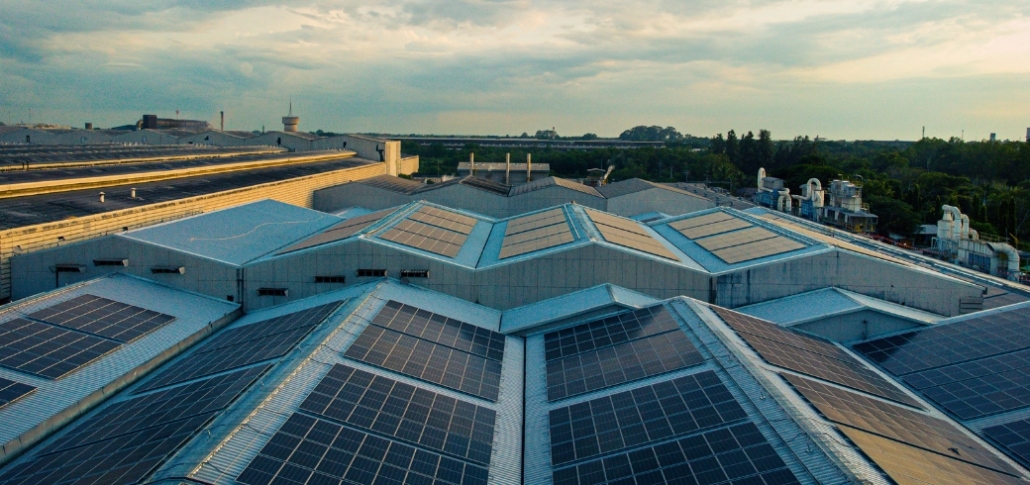
Roofing for manufacturing is a different beast from regular residential and commercial projects.
A roofing system for industrial facilities requires advanced planning for every condition that your roof may encounter. And that means not just internal processes but also exposure to the elements and adherence to building codes.
Roofing for manufacturing facilities entails selecting a durable roofing substrate that can withstand the performance requirements of industrial environments. It should be able to withstand harsh conditions, such as chemical exposure and heavy equipment, as well as the more basic weather events in New England.
Plan for your industrial facility to have what it needs to work year-round with minimal downtime for repairs and maintenance. Here’s what you should do upfront to save time and money!
What Makes Manufacturing Roofs Different?
An industrial facility requires careful consideration when building, and it starts with ensuring that the roof can withstand long-term wear and tear. The roofing system must be able to withstand heavy rooftop equipment and frequent penetrations, as well as HVAC and forklift paths.
The ability to withstand heavy loads like these is the foundation of a quality industrial roof. A well-performing roof minimizes accidents, saves money on long-term repairs, and protects the interior of the building, including products and equipment.
Of course, manufacturing processes also require attention. Depending on your field, the roof may be exposed to environmental substances that accelerate its degradation more quickly than usual. It should withstand oils, fats, fuels, solvents, and heat from process exhausts.
The Best Industrial Roofing Systems for Factories (Pros and Cons)
What materials should you consider for your industrial roofing? Cookie-cutter answers may not account for all of the considerations you must make about your business. The best commercial roofing material requires you to survey your business needs and make an educated choice.
Some of these systems for roofing for manufacturing might help you make the right choice for your commercial projects.
PVC (KEE-PVC) for Chemical Resistance
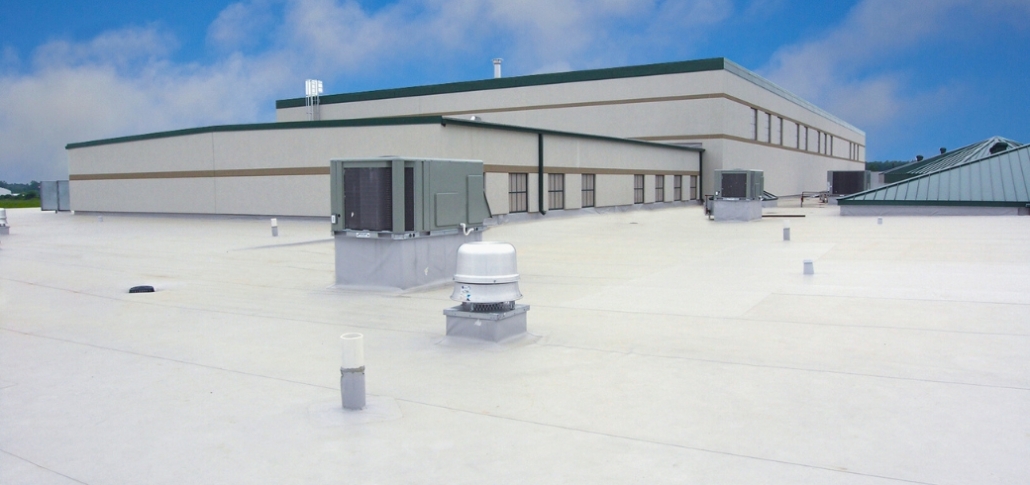
PVC is the ideal choice for an industrial facility with a heavy emphasis on manufacturing processes involving chemicals. This roofing material is designed to offer superior resistance to oils, fats, and acids. With this durability in mind, PVC is ideal near food processing, chemical exhausts, printing, and plastics.
TPO for Cost and Efficiency
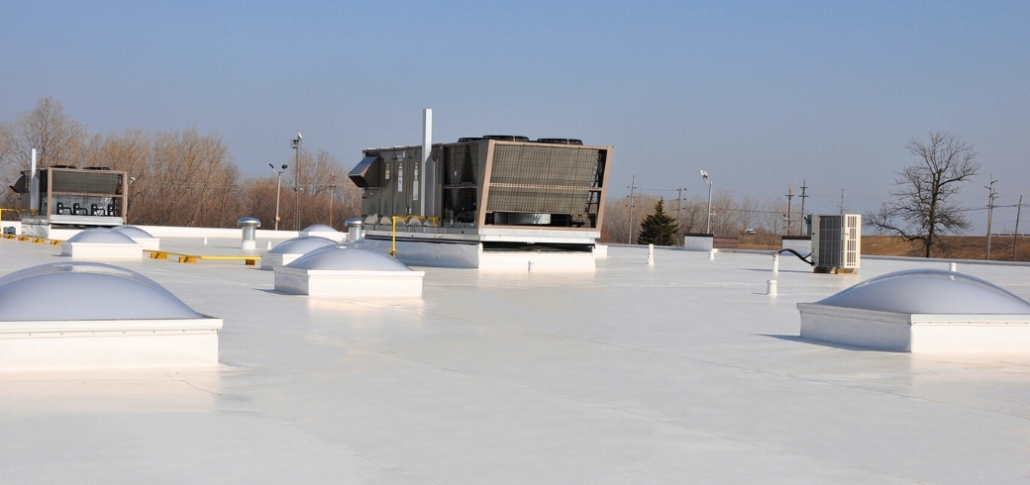
TPO offers strong value and cool-roof performance, making it ideal for large footprints. When cost is one of your primary drivers, TPO delivers. Unlike PVC, which is designed to withstand chemical processes, TPO is better suited for lighter chemical exposure.
TPO can minimize the commercial roof replacement cost while still offering long-term benefits for some of these milder conditions.
EPDM for Durability
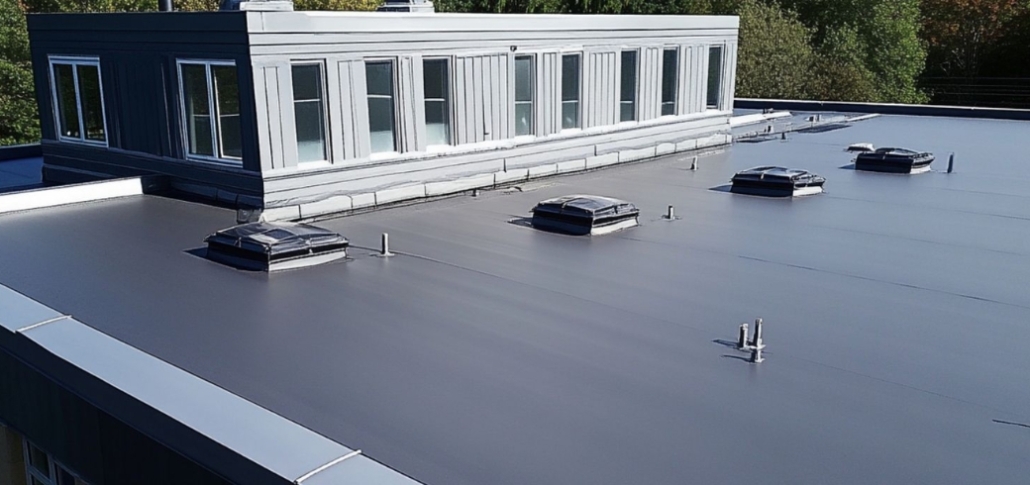
EPDM can be a great roofing system for an industrial facility because it has proven longevity. The black membrane has heat gain considerations. You will have the option between ballast and fully adhered options.
A ballasted roof consists of a protective membrane held in place by gravel. On the other hand, a fully-adhered roof offers a better protective coating for commercial installations. Both may be of use depending on the type of heavy equipment and chemical processes involved in the facility.
Modified Bitumen & BUR
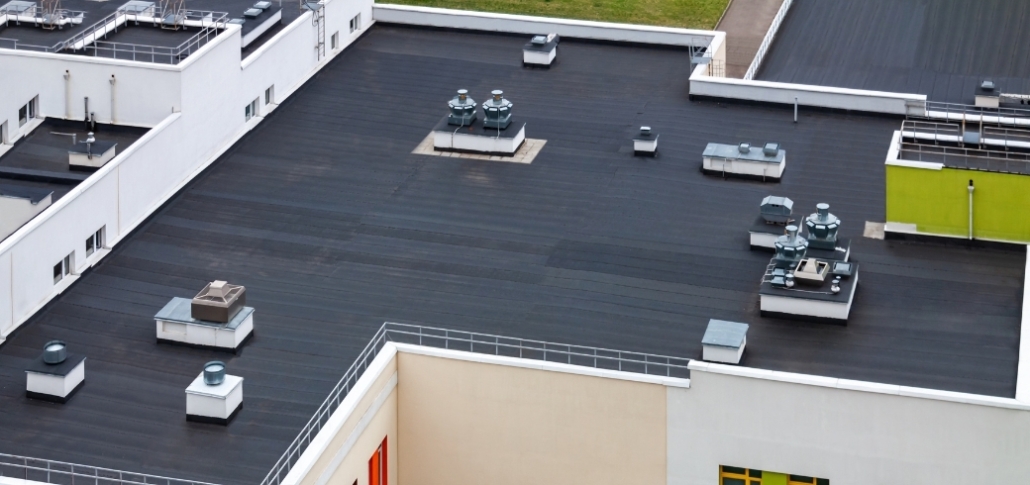
Modified bitumen and BUR offer multi-ply redundancy for abuse resistance. This offers protection from punctures and tears caused by heavy equipment use, foot traffic, and even storm damage in a high-risk area prone to adverse weather conditions.
When installing modified bitumen and BUR roofing systems, flame safety can be achieved by adhering layers of modified bitumen to fiberglass using a flame torch. If you use this method, you will want to pay close attention to fire safety, particularly in an occupied plant.
Additionally, you may want coatings for enhanced reflectivity, making it safer to work in late-night hours.
There is also a downside to modified bitumen roofing for manufacturing. It tends to accumulate more ponding water than some of the other materials you will find here, especially during heavy rainfall periods.
Metal Roofs (Select Buildings)
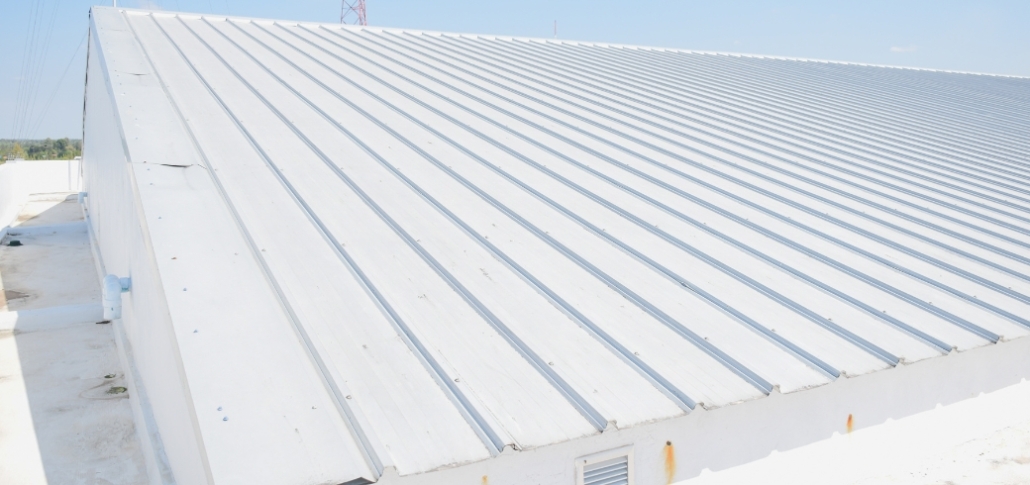
Metal roofs for industrial manufacturing have long been a popular choice. They offer longevity, with many outlasting some of the other types of roofing for manufacturing. Structural strength and integrity are at the core of why many businesses choose metal roofing.
However, acoustics and penetrations must be carefully engineered. Noise reduction can be incorporated into one of these durable roofs by using acoustic steel decking, underlayment, or insulation.
While they do bring an added expense to insulate against echoing sounds, it can be worth it to have a soundproof facility with the durability of a metal roof.
Request A Free Quote
Speak To Our Roofing Specialists Today!
National Roofing & Solar offers expert commercial roof replacements, leak repairs, and solar upgrades, maximizing energy efficiency and ROI.
FM Global & Wind Uplift – What New England Plants Need
When selecting a manufacturer for the roofing of your industrial manufacturing plant, looking for Factory Mutual (FM) certification is a necessity. You may see this noted on the roof as a “1-90” system, indicating that it is a Class 1 for fire resistance and has a wind uplift capacity of 90 pounds per square foot.
Most manufacturers carry FM Global insurance. They often require FM-approved assemblies with field, perimeter, and corner ratings that exceed the very basic “1-90” shorthand.
New England plants need roof corners and perimeter enhancements to meet this FM standard. The exact corner and perimeter enhancements you need vary based on the wind zones for your area. Most often, it involves mechanical fasteners or adhesives to minimize wind uplift if weather conditions deteriorate.
Some of the enhancements attached include cover board, underlying insulation, and polyester-reinforced base ply.
The best thing you can do is engage in an FM-approved assembly design early. Match deck type, fasteners, and coverboard to target ratings for coastal MA/RI wind exposure.
Drainage, Ponding Water, & Code Slope
Roofing for manufacturing facilities should also take into account the potential for ponding water. The minimum code slope is ¼ inch per foot for most membrane roofs to reduce the ponding risk. The exception to this code minimum is coal tar, which requires only a 1/8-inch slope per foot.
Flat roof systems might not be ideal for situations where ponding water is a concern.
Designing a roof to eliminate ponding is crucial. To this end, you may use tapered insulation or crickets behind units. Ultimately, more drains and scuppers sized per ASCE 7 rainfall rates will be an essential component of your roofing plan. Plan for extensive redundancy and easy access for maintenance.
Warranty implications for ponding are worth considering. Many manufacturers tie coverage to the use of adequate drainage and the absence of chronic ponding. To maintain these warranties, you must exercise due diligence from the outset to prevent standing water.
Insulation, Energy Code & Thermal ROI in Zone 5
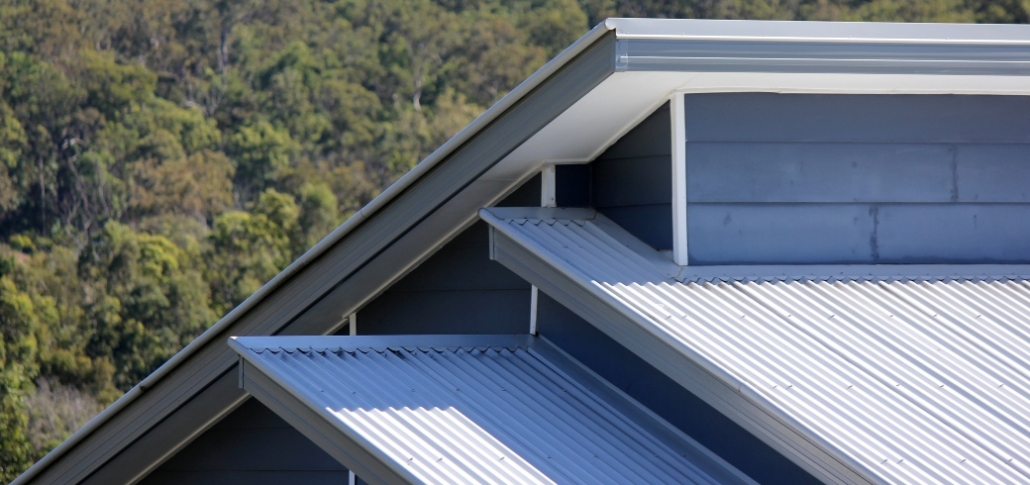
New England manufacturing plants should consider the IECC guidance for commercial roofs with insulation above deck. Zone 5 targets are found in states including Massachusetts, Connecticut, and Rhode Island. The minimum continuous insulation is marked as R-30ci for these New England areas.
What does that mean for your material choices while considering manufacturing processes?
You have several options for your roofing insulation. The first is polyiso, which has a high R-value per inch, in conjunction with a cover board. Industrial facilities can also utilize staggered joints to keep the plant well-insulated.
Another method would be a vapor retarder strategy for process humidity. This strategy prevents water vapor from inside the industrial manufacturing plant from entering the roof, where it would later condense and damage the structural integrity.
Snow Loads, Freeze-Thaw & Roof Access in MA/CT/RI
New England roofs must account for the winter weather, including drift, sliding, and saturation weight. When the winter storms blow in, manufacturing facilities don’t want to have to fret over whether their roof will hold up under the burden of snow and ice.
Plan now for safe snow response protocols and routine structural checks. Knowing that your roof can withstand the weather will give you peace of mind, minimize repairs, and keep the business operational even during the worst storms.
Additionally, you’ll want to consider detailing for freeze-thaw conditions. This can include edge metals and term bars, both of which minimize water intrusion into the building that can lead to more expensive damage. You may also need to install walkway pads with more traction.
PV-Ready Roofing for Manufacturing
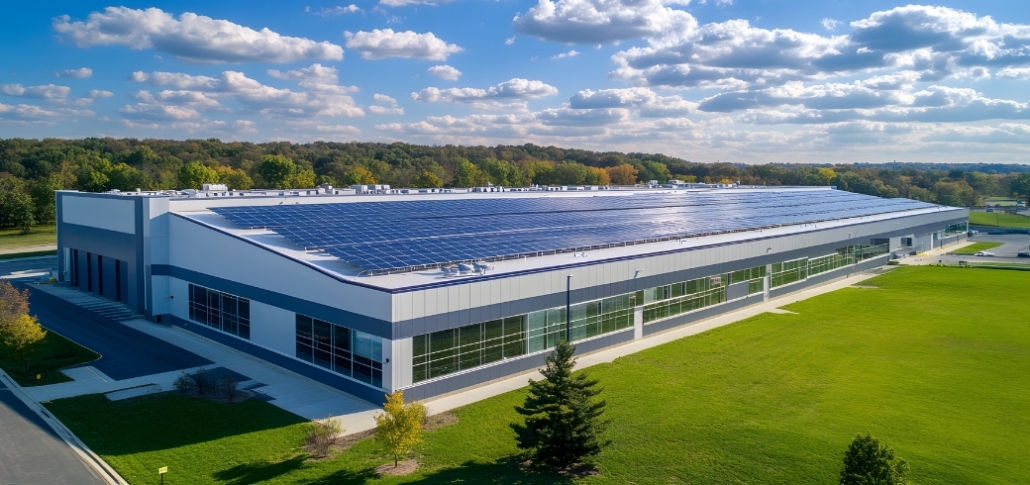
Gone are the days when manufacturing facilities pulled their energy from an expensive grid. Now, it makes more sense for industrial roofing to be prepped for photovoltaic (PV) systems that can generate solar energy and minimize long-term operational costs. You’ll want to coordinate roofing and solar from the start.
Select a PV-compatible membrane when installing the roof. This also means accommodating the mounting for a robust solar-energy system. You may opt for a ballasted system on flatter roofs if you prefer no penetrations, or select an attached system that anchors the PV panels to the roof.
This is also the prime time to plan for fire and wind codes, as well as service aisles so that all new panels can be repaired and maintained easily in the future.
The most important thing is to ensure that you protect your warranty on both the roof and the PV panels.
Keep in mind that there are New England incentives to implement solar systems. Pair your roof projects with solar incentives and financing to help offset the initial outlay of cash. Some of these programs include Mass Save, EnergizeCT, and Rhode Island programs, covered at the proposal/LP level.
Life-Cycle Maintenance Plan for Industrial Roofs
To keep your roof in prime condition, establish a regular inspection and maintenance schedule. In general, best practices include quarterly inspections and after every major weather event. When inspecting the roof, prioritize penetrations, seams, curbs, and drains.
At a bare minimum, you will want to complete moisture surveys and IR scans at year two and just before all warranty milestones. This is the ideal time to integrate CMMS tickets for recurring issues and establish a best-practice cadence for the industrial facility.
Ensure that you train all plant maintenance teams on safe access, debris control, and a policy of contacting National Roofing and Solar Corporation before making any penetrations. Choosing the right commercial roofing contractor can minimize your downtime.
FAQs
Here are some of the questions we frequently encounter pertaining to roofing for manufacturing. Let some of these answers influence your building decision.
The best roofing material depends on your application, geographic location, and workload. If it will be exposed to chemicals or penetration, you may want to choose one material over another. Consult with the experts at National Roofing for help planning.
When it comes to PV panels, you should coordinate with your roofing company from the start to ensure that your warranty will not be voided by installation of a solar system.
You may want to consider more slope to your roof and a drainage system if your roof is in a rain-heavy area. More drains and scuppers should be installed.
Request A Free Quote
Speak To Our Roofing Specialists Today!
National Roofing & Solar offers expert commercial roof replacements, leak repairs, and solar upgrades, maximizing energy efficiency and ROI.
Conclusion
Roofing for manufacturing requires robust planning to account for the unique loads, penetrations, chemical exposure, and more. Aligning your roofing plan with the unique weather conditions of New England, such as wind uplift, ponding water, and snow loads, is crucial to its longevity.
However, maintenance plays a primary role in determining how your roof holds up in the long term. Know how to best take care of your roof or entrust its maintenance to our experts.
Roofing for manufacturing ensures your industrial facility operates smoothly and protects the expensive equipment contained within the building. Meanwhile, it allows you to continue your work without fear of disruption from leaks, wind damage, condensation, and more.
When you’re ready to start thinking about the manufacturing processes and how they impact the roofing decisions, National Roofing and Solar Corporation can help. We have the experience you need to bridge the gap between building a facility and maintaining it in the long term.
Reach out to us today for an evaluation of how you can improve your roofing and solar system, starting with the commercial roof replacement process!